

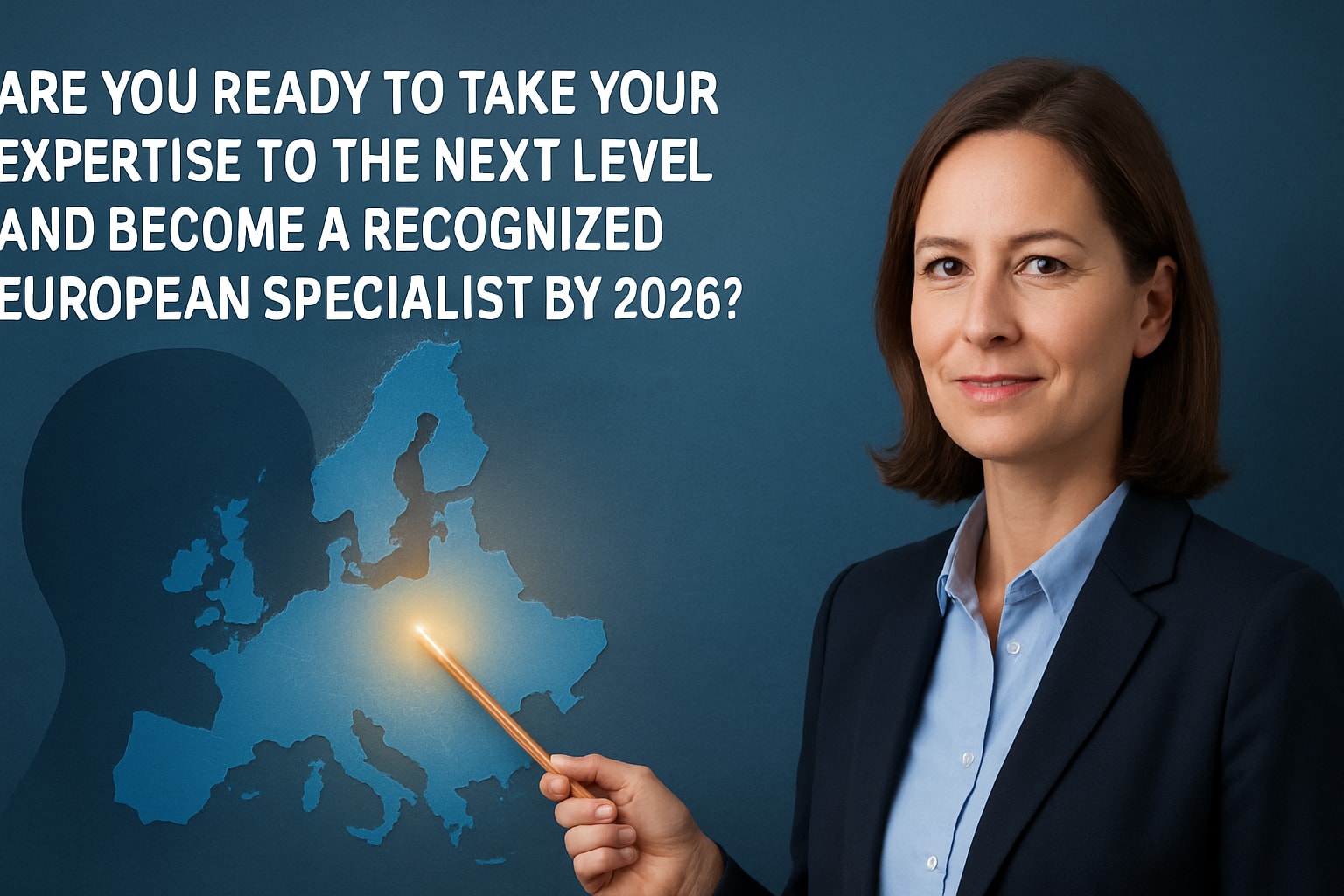
Are you ready to elevate your career and become a recognized european specialist by 2026? As the demand for european specialist roles grows across Europe, there has never been a better time to advance your expertise.
This guide will help you navigate the evolving landscape, outlining every step to becoming a european specialist. Explore the latest trends, essential skills, qualification pathways, and strategies to secure your future in top industries.
Uncover expert insights, actionable resources, and a clear roadmap designed to help you stand out as a european specialist in a competitive market.
Understanding the Role of a European Specialist in 2026
Are you curious about what it means to be a european specialist in 2026? As the demand for cross-border expertise grows, the profile of the european specialist is becoming more dynamic and impactful than ever before.

Definition and Scope of a European Specialist
A european specialist is a professional with advanced skills, deep sector knowledge, and recognized credentials to operate effectively across European markets. This role spans multiple fields, including:
- Engineering
- Healthcare
- Automotive
- Information Technology
- Environmental sciences
These specialists bridge technical expertise with a strong grasp of European regulations and cultural fluency.
How the Role Has Evolved Over the Past Decade
The european specialist has transformed significantly over the last ten years. Driven by EU integration, digitalization, and new policy frameworks, their responsibilities have expanded. Today, the role emphasizes not just technical mastery, but also adaptability to rapid market changes and regulatory shifts.
In the past, specialists often focused on national markets. Now, a european specialist is expected to navigate cross-border projects, manage multilingual teams, and comply with ever-changing EU standards.
Responsibilities and Expectations in 2026
By 2026, employers expect a european specialist to demonstrate:
- Cross-border project management
- Up-to-date regulatory knowledge
- Digital proficiency, including use of collaboration platforms
- Ability to interpret and apply EU policy updates
Increasingly, specialists are valued for their skill in integrating sustainability practices and leveraging digital tools in their daily work.
Industry Trends Shaping the Future
Several trends are reshaping the landscape for the european specialist. Digital transformation is accelerating, with automation, AI, and data analytics becoming standard in many sectors. Sustainability is also front and center, as the European Green Deal drives demand for skills in green energy, circular economy, and compliance with environmental regulations.
Recent data from European Labour Market Trends highlights strong growth in IT, healthcare, and automotive specializations, alongside a surge in remote work opportunities.
In-Demand Sectors and Specializations
According to Eurostat and industry reports, the top areas for a european specialist include:
| Sector | Top Specializations |
|---|---|
| IT | Cybersecurity, cloud computing |
| Healthcare | Telemedicine, regulatory compliance |
| Automotive | Electric vehicles, diagnostics |
| Engineering | Green technologies, smart systems |
| Environmental | Sustainability, energy management |
These fields are expected to see continued growth through 2026.
Essential Skills for Success
To thrive as a european specialist, professionals need to master both hard and soft skills:
- Multilingual communication (English, German, French, etc.)
- Cultural competence and adaptability
- Technical certifications (sector-specific)
- Problem-solving and teamwork
Digital literacy, such as data analysis and cybersecurity awareness, is increasingly required.
Real-World Example: Navigating Regulatory Updates
Consider an automotive european specialist adapting to new EU emissions standards. By staying current with regulations and updating their technical certifications, they ensure compliance for multinational clients. This proactive approach not only keeps them competitive but also fosters trust with employers and regulators.
Challenges and Opportunities Ahead
The path of a european specialist is not without challenges. Navigating post-Brexit regulations, adapting to remote work models, and facing global competition require resilience and agility. However, these challenges bring opportunities for innovation, continuous learning, and career growth across borders.
As Europe’s labor market evolves, the european specialist who embraces digital transformation and sustainability will remain at the forefront of their field.
Step-by-Step Pathway to Becoming a European Specialist
Embarking on the journey to become a european specialist requires a clear roadmap tailored to evolving European standards. This step-by-step guide will help you identify your starting point, research opportunities, bridge qualification gaps, and position yourself for a successful specialist career in 2026.

Step 1: Assessing Your Current Qualifications and Experience
The first step in becoming a european specialist is evaluating your existing academic credentials and work history. Start by listing your degrees, diplomas, and professional experiences. Compare these to the standards required for your target field in Europe.
Use frameworks like the European Qualifications Framework (EQF) to translate your local qualifications into EU-recognized levels. This helps you spot any gaps that may hinder your specialist ambitions. For instance, a civil engineer with a non-EU degree can use the EQF to assess alignment with European counterparts.
Ask yourself: Do your skills and experiences match those expected of a european specialist in your sector? This honest assessment sets the foundation for your targeted upskilling and career planning.
Step 2: Researching Specializations and Market Demand
Next, explore which specializations are in high demand for a european specialist. Analyze labor market data using platforms like EURES, Eurostat, and industry-specific reports. These resources provide insights into sectors with robust growth and skills shortages.
For example, there has been a notable surge in demand for green energy specialists, reflecting Europe’s sustainability commitments. Data-driven research ensures your chosen pathway as a european specialist aligns with future opportunities.
Create a shortlist of roles that match your strengths and interests. This research phase is crucial for making informed decisions about where to specialize and how to position yourself in the competitive European landscape.
Step 3: Meeting Educational and Certification Requirements
To qualify as a european specialist, you must meet recognized educational and certification standards. Investigate which degrees, diplomas, or industry certifications are essential for your chosen field. Accreditation by relevant bodies or membership in professional associations often boosts your credibility.
Consider timelines for upskilling or credential evaluation. For example, recognition of foreign degrees in Germany or France can take several months, depending on your field and documentation. It is wise to start this process early to avoid delays in your transition to a european specialist role.
Keep a checklist of required qualifications and track your progress. This proactive approach ensures you meet all necessary benchmarks and remain competitive in your specialization.
Step 4: Navigating Licensing and Regulatory Hurdles
Becoming a european specialist means understanding the licensing and regulatory landscape for your profession. Each country may have unique requirements, especially in regulated sectors like healthcare or engineering.
Familiarize yourself with sectoral directives and mutual recognition agreements within the EU. For instance, IT professionals may benefit from streamlined licensing in the Netherlands due to specific policies. To learn more about how your qualifications are recognized across Europe, consult the Professional Qualifications Recognition portal for comprehensive guidance.
Addressing these hurdles early helps you avoid setbacks and ensures a smoother transition into your specialist role.
Step 5: Building Language and Cultural Competence
Success as a european specialist depends heavily on language skills and cultural understanding. Multilingualism is often a prerequisite for cross-border roles. Assess your proficiency against CEFR benchmarks and identify areas for improvement.
Consider enrolling in language courses or intercultural training programs. For example, speaking German can be a significant advantage for automotive specialists working in Germany. Developing cultural competence will help you collaborate effectively with colleagues across the continent and enhance your reputation as a trusted european specialist.
These skills are not just assets but essentials for long-term career growth and mobility.
Step 6: Gaining Practical Experience and Networking
Practical experience is vital for any aspiring european specialist. Seek internships, apprenticeships, or industry placements that offer exposure to European practices and standards. Programs like Erasmus+ provide valuable opportunities for early-career specialists to gain hands-on experience.
Leverage professional networks such as LinkedIn and EURES to find mentors, exchange ideas, and stay updated on industry trends. Participation in European conferences or workshops can further expand your connections and visibility as a european specialist.
Building a robust network and gaining practical insights will accelerate your professional journey and open doors to new opportunities across Europe.
Essential Skills and Certifications for European Specialists
Equipping yourself with the right skills and certifications is vital for any european specialist aiming to thrive in 2026. As industries evolve, employers increasingly seek candidates who blend technical expertise with adaptability and a commitment to ongoing learning. Whether you are in IT, healthcare, engineering, or automotive fields, mastering a combination of sector-specific and cross-functional competencies will set you apart in a competitive European landscape.

Core Technical Skills by Sector
For a european specialist, technical prowess is non-negotiable. Each sector demands its own set of core abilities:
- IT: Software development, cybersecurity, and cloud solutions.
- Engineering: Advanced CAD, project management, and compliance with EU directives.
- Healthcare: Clinical procedures, regulatory compliance, and health informatics.
- Automotive: Diagnostics, electric vehicle technology, and digital servicing tools.
Employers expect a european specialist to maintain up-to-date knowledge in their field, often verified through sector-recognized qualifications.
Soft Skills and Digital Competencies
Beyond technical skills, a european specialist must possess strong soft skills:
- Communication: Clear interaction across cultures and languages.
- Adaptability: Navigating frequent regulatory and technological changes.
- Problem-solving: Tackling complex, cross-border challenges.
- Teamwork: Collaborating in international, multidisciplinary teams.
Digital transformation is reshaping every sector. Proficiency in data analysis, digital collaboration platforms, and cybersecurity is now essential for a european specialist. These skills enable seamless work across borders and remote teams.
Top Certifications for European Specialists
Certifications validate expertise and boost employability for any european specialist. Leading options include:
| Sector | Top Certifications |
|---|---|
| IT | CompTIA, CISSP, Microsoft Azure |
| Engineering | PRINCE2, PMP, EUR ING |
| Healthcare | EU sector certificates, CPD |
| Automotive | Manufacturer-specific diplomas |
Language certifications such as DELF/DALF (French) and Goethe-Zertifikat (German) also enhance mobility. For tips on how to present your skills and credentials effectively, explore Presenting Your Skills and Qualifications.
Language Skills and Lifelong Learning
Multilingualism is a hallmark of a successful european specialist. Proficiency in two or more European languages, supported by certifications, broadens job prospects and facilitates integration. Lifelong learning is equally crucial. Continuous professional development (CPD) ensures that a european specialist stays relevant, adapts to new technologies, and meets regulatory requirements.
Employers value candidates who actively pursue new certifications and participate in industry workshops, webinars, and MOOCs. Embracing ongoing education signals commitment and future readiness.
Real-World Example and Data Insights
Consider a healthcare european specialist who leveraged CPD courses on digital health records to advance their career within the EU. This proactive approach not only secured their compliance with evolving regulations but also opened doors to leadership roles.
Recent Eurostat and LinkedIn surveys show that over 70 percent of employers require certifications for specialist roles. This trend highlights the importance of investing in recognized qualifications and skill-building for every aspiring european specialist.
Navigating Career Opportunities Across Europe
Seizing career opportunities as a european specialist in 2026 requires a strategic approach and a deep understanding of the European job landscape. With demand for skilled professionals rising, navigating this environment effectively can set you apart.

Job Search Strategies for European Specialists
To thrive as a european specialist, leverage dedicated European job portals such as EURES, EuroJobs, and LinkedIn. These platforms regularly post roles tailored to cross-border professionals and offer tools like skills match and market insights.
Crafting your application materials to European standards is critical. Use a concise, achievements-focused CV and a tailored cover letter. Highlight your multilingual abilities and certifications relevant to your specialization. Prepare for interviews by researching cultural norms in your target country, as expectations may differ widely.
According to Labour and Skills Shortages in Europe, sectors like IT, healthcare, and green energy are actively seeking european specialist talent. For instance, a recent graduate in engineering successfully secured a role in Scandinavia by networking at industry events and demonstrating adaptability to local practices.
Understanding Employment Contracts and Work Culture
When you secure a position as a european specialist, you will encounter various employment contract types. The most common are permanent, fixed-term, and freelance agreements. Each offers different benefits and obligations, so review details carefully before signing.
Salary benchmarks and benefits can vary significantly across Europe. In Germany, specialists often enjoy robust social security and pension schemes, while Spain may offer more generous vacation time but different bonus structures. Probation periods are typical, usually ranging from three to six months, during which performance is closely monitored.
Work culture also differs by country. For example, a european specialist in Germany might experience a structured schedule and clear hierarchies, while Spain often prioritizes flexibility and work-life balance. Understanding these nuances will help you integrate smoothly into your new environment.
Mobility and Relocation Considerations
Mobility remains a defining feature for the european specialist community. Navigating visa and work permit processes is essential, especially for non-EU citizens or those relocating post-Brexit. Most EU countries offer streamlined procedures for recognized professions, but always verify current requirements with national authorities.
Taxation, social security, and healthcare entitlements can impact your overall compensation. Registering with local authorities ensures access to healthcare and pension contributions. If relocating with family, research schooling options, housing markets, and integration support services.
Popular destinations for european specialist roles include the Netherlands, Germany, and the Nordics, driven by strong economies and high demand for technical expertise. According to Eurostat migration data, IT specialists are especially drawn to the Netherlands for its innovation-friendly policies and vibrant tech sector.
Relocation checklist for european specialist professionals:
- Secure necessary work permits and visas
- Arrange temporary housing before arrival
- Register with local tax and healthcare authorities
- Explore local support networks for expatriates
With careful planning and an informed approach, building a successful european specialist career across borders is well within reach.
Future-Proofing Your European Specialist Career
Adapting to change is essential for every european specialist aiming to thrive in 2026. The professional landscape is evolving rapidly, driven by technology, sustainability, and shifting regulations. Building a resilient, future-proof career requires a proactive and strategic approach.
Embracing Digital Transformation
The digital revolution is redefining the role of the european specialist. Automation, artificial intelligence, and remote work are now integral to daily operations. To stay ahead, specialists must upskill in areas like data analysis, cybersecurity, and digital project management.
For instance, automotive experts are increasingly required to diagnose and service vehicles using advanced diagnostic tools and software. Gaining hands-on experience with these systems, as seen in European vehicle servicing expertise, demonstrates how digital proficiency is applied in real-world scenarios.
Continuous learning is vital. Enroll in online courses, attend webinars, and participate in digital workshops to keep your skills relevant as a european specialist.
Sustainability and the Green Deal
Sustainability is now at the heart of European policy. The European Green Deal is driving the demand for specialists with expertise in renewable energy, energy efficiency, and green technologies. As a european specialist, developing green skills can open doors to new roles and sectors.
Consider specializing in sustainable engineering, environmental compliance, or energy management. These areas are projected to see significant growth, with the European Commission estimating a 30% rise in green skill demand by 2026.
Pursuing certifications in sustainability or environmental management further enhances your profile and demonstrates commitment to future-focused expertise as a european specialist.
Building Resilience and Adaptability
Economic shifts and regulatory changes are constants in the European market. A successful european specialist is adaptable, resilient, and ready to pivot as needed. Developing soft skills like problem-solving, communication, and cultural agility is as important as technical knowledge.
Staying informed about EU policy updates and industry trends is crucial. For example, adapting to hybrid work models in 2026 requires flexibility and a willingness to embrace new collaboration tools. Resilience also means being open to cross-sector opportunities and continuous professional development as a european specialist.
Networks, Mentorship, and European Initiatives
Building a strong professional network is key for every european specialist seeking long-term success. Engage in mentorship programs, join sector-specific associations, and participate in European-wide initiatives like Horizon Europe.
Professional communities offer guidance, job leads, and peer support, helping you navigate career transitions and find new opportunities. According to recent LinkedIn and EURES data, over 60% of specialists attribute career advancement to active networking.
Taking part in collaborative projects, conferences, and training grants ensures that a european specialist remains connected, informed, and ready for the future.
Resources and Support Networks for European Specialists
Access to the right resources and support networks is essential for anyone aiming to succeed as a european specialist. Leveraging these can streamline your journey, accelerate your learning, and open doors to new opportunities across Europe.
Professional and Industry Organizations
Every european specialist should consider joining recognized professional associations and sector councils. These organizations offer access to the latest industry standards, regulatory updates, and exclusive networking events. Examples include the European Federation of National Engineering Associations (FEANI), the European Public Health Association (EUPHA), and automotive sector councils.
Chambers of commerce across Europe can also provide guidance on legal requirements, market trends, and cross-border collaborations. Membership often comes with added perks such as job boards, workshops, and certification support tailored to european specialist roles.
Governmental and EU Support Services
Governmental agencies and EU-backed platforms are crucial allies for the european specialist. National contact points and recognition agencies help evaluate and validate foreign qualifications, ensuring your credentials meet European standards.
EURES advisors offer personalized job search support, mobility advice, and labor market insights. They also connect candidates with employers seeking qualified european specialists across borders. These resources are particularly valuable for navigating complex regulatory systems and understanding country-specific requirements.
Learning Platforms and Continuous Development
Staying up to date is non-negotiable for the modern european specialist. Online platforms like Coursera, Udemy, and specialized MOOCs provide flexible courses in technical, language, and soft skills. Many professional bodies also offer sector-specific micro-credentials and webinars.
Continuous professional development (CPD) is often required to maintain certifications. Tracking your progress and enrolling in regular upskilling ensures your expertise remains competitive in a rapidly evolving European market.
Funding, Grants, and Financial Support
Financial support can make a significant difference in your journey as a european specialist. EU programs like Erasmus+ and Marie Skłodowska-Curie Actions offer scholarships, mobility grants, and research funding. Many countries also provide national training subsidies to support specialist upskilling.
Before applying, check eligibility criteria and deadlines. Proactive research into available grants can help reduce the financial burden of professional development and international relocation.
Peer Networks and Real-World Examples
Connecting with peers is one of the most effective ways for a european specialist to stay informed and motivated. Online forums, LinkedIn groups, and mentorship programs enable knowledge sharing and professional growth. Participating in pan-European specialist networks can lead to new collaborations and job opportunities.
For real-world inspiration, explore how teams of experts operate by visiting Meet our European specialists. Seeing how specialists collaborate and support each other's growth can offer valuable insights into building your own support network.
Recent data from LinkedIn and EURES reveals that over 60% of european specialists attribute successful job mobility to active engagement in professional networks. By prioritizing these connections, you can position yourself for long-term success in the European market.
As you explore the steps to becoming a European Specialist in 2026, remember that staying ahead means investing in both your knowledge and your vehicle’s performance—especially if you drive a European model. Your skills deserve the same level of care and expertise you bring to your career. If you rely on your Volkswagen, Audi, Mercedes, BMW, or Skoda to keep you moving forward, why not trust Auckland’s most experienced team for your next service? Let’s ensure you’re ready for every opportunity on the road ahead—Book in your service and drive your ambitions with confidence.