
Modern European vehicles represent significant investments that demand meticulous care to maintain their performance, reliability, and resale value. Regular vehicle service maintenance isn't merely about changing oil or rotating tyres; it's a comprehensive approach to preserving your car's engineering excellence whilst preventing costly repairs. For owners of Volkswagen, Audi, Mercedes, BMW, and Skoda vehicles, understanding the fundamentals of proper maintenance ensures your vehicle delivers the performance and longevity these manufacturers engineered into every model.
Understanding Vehicle Service Maintenance Fundamentals
Vehicle service maintenance encompasses all scheduled and preventive procedures designed to keep your car operating at peak efficiency. These procedures follow manufacturer specifications whilst addressing wear patterns specific to how you drive and where you operate your vehicle.
European manufacturers design their vehicles with precise tolerances and sophisticated systems that require specialized attention. The accepted trade standards for automotive repair ensure that maintenance work meets consistent quality benchmarks. Your service schedule isn't arbitrary; engineers determine these intervals based on extensive testing and real-world data.
Scheduled Maintenance vs Preventive Maintenance
Understanding the distinction between these two approaches helps you make informed decisions about your vehicle's care.
Scheduled maintenance follows your manufacturer's prescribed timeline:
- Oil and filter changes at specific kilometre intervals
- Brake fluid replacement every two years
- Transmission service at designated intervals
- Timing belt replacement at manufacturer-specified points
- Spark plug replacement according to service schedule
Preventive maintenance addresses potential issues before they become problems:
- Regular visual inspections of belts and hoses
- Brake pad thickness monitoring
- Tyre tread depth and pressure checks
- Battery condition assessment
- Coolant system pressure testing
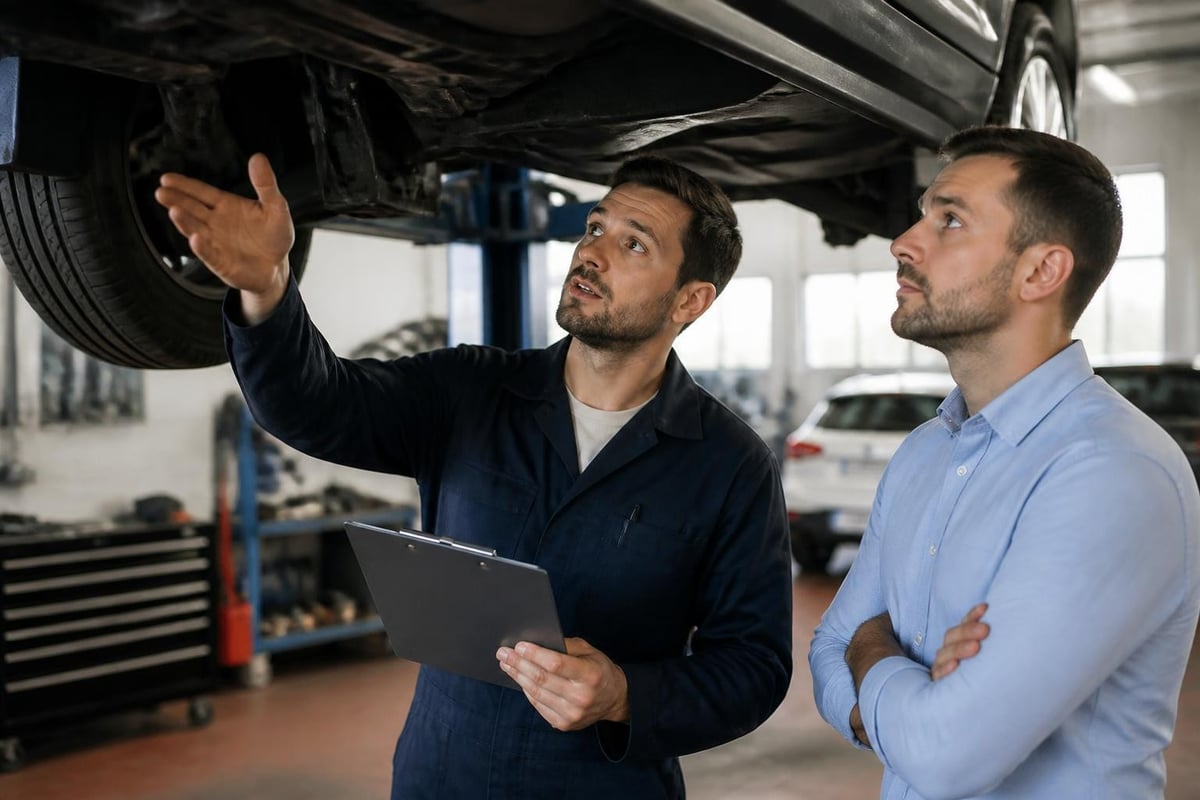
The most effective vehicle service maintenance strategy combines both approaches. Research on fleet maintenance best practices demonstrates that proactive scheduling reduces unplanned downtime by up to 70% and significantly controls long-term repair costs.
Critical Service Intervals for European Vehicles
European manufacturers specify service intervals based on sophisticated engine management systems and quality lubricants. However, New Zealand driving conditions often demand adjustments to these schedules.
Minor Service Requirements
Minor services typically occur every 15,000 kilometres or 12 months, whichever comes first. These services maintain your vehicle's daily operation and catch minor issues early.
| Service Component | Procedure | Benefit |
|---|---|---|
| Engine Oil | Replace with manufacturer-specified grade | Reduces engine wear, maintains efficiency |
| Oil Filter | Install new filter | Ensures clean oil circulation |
| Brake Inspection | Visual check of pads, discs, fluid | Identifies wear before safety compromise |
| Tyre Rotation | Rotate according to wear pattern | Extends tyre life, improves handling |
| Fluid Levels | Check and top up all fluids | Prevents system failures |
Major Service Procedures
Major services occur at 30,000-kilometre intervals or every two years. These comprehensive inspections address components that experience slower degradation but require eventual replacement.
During major service appointments, technicians perform detailed examinations of your vehicle's critical systems. Air filters, cabin filters, brake fluid, and coolant receive attention alongside standard oil service procedures. For vehicles with timing belts, replacement typically occurs between 90,000 and 120,000 kilometres depending on the manufacturer.
The importance of adhering to quality maintenance practices cannot be overstated. Using genuine or equivalent-quality parts specifically designed for European vehicles ensures compatibility with your car's sophisticated systems.
Maintaining European Vehicle Technology
Contemporary European vehicles incorporate advanced technology that requires specialized diagnostic equipment and expertise. From complex engine management systems to sophisticated suspension control, these vehicles demand more than generic service approaches.
Diagnostic System Integration
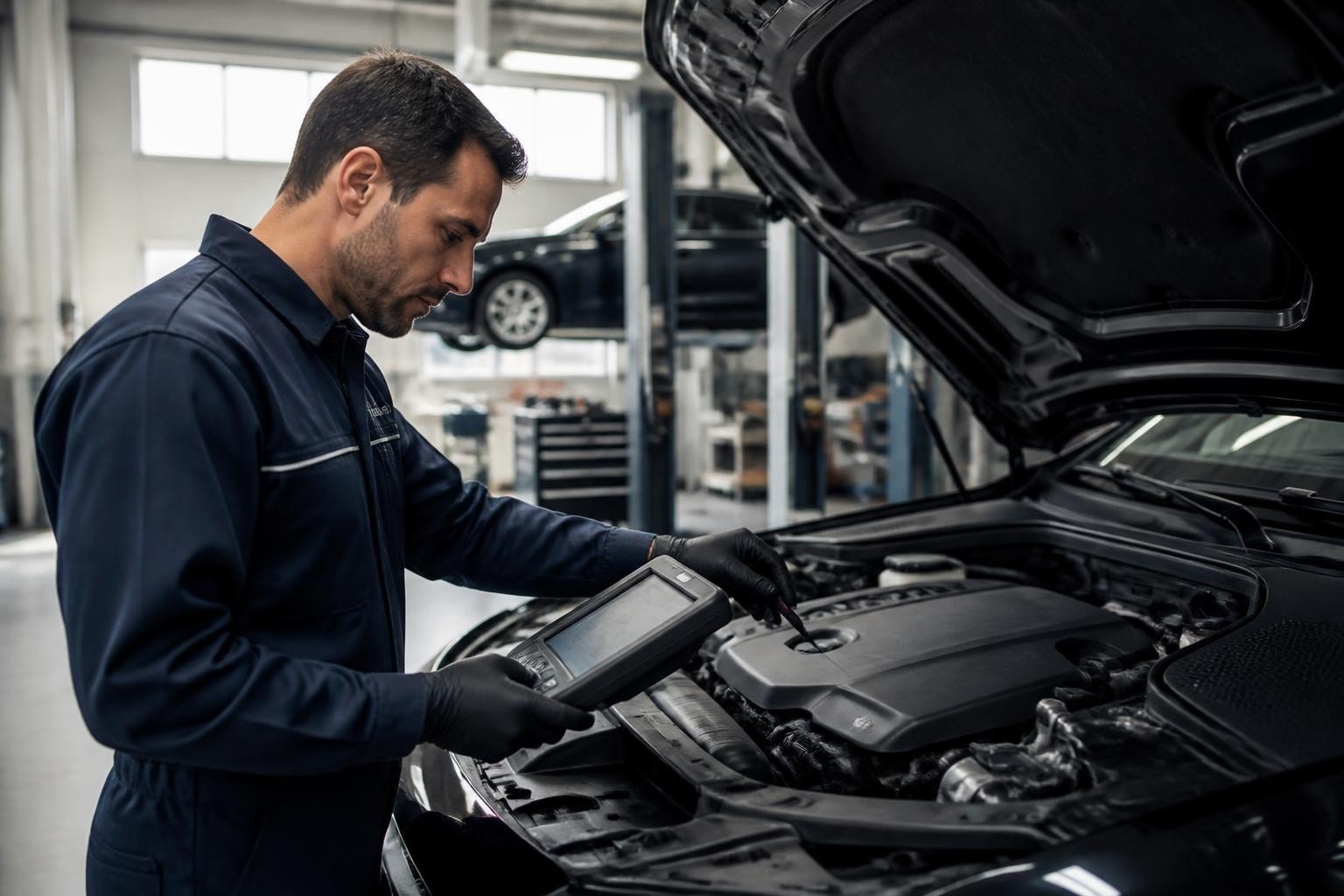
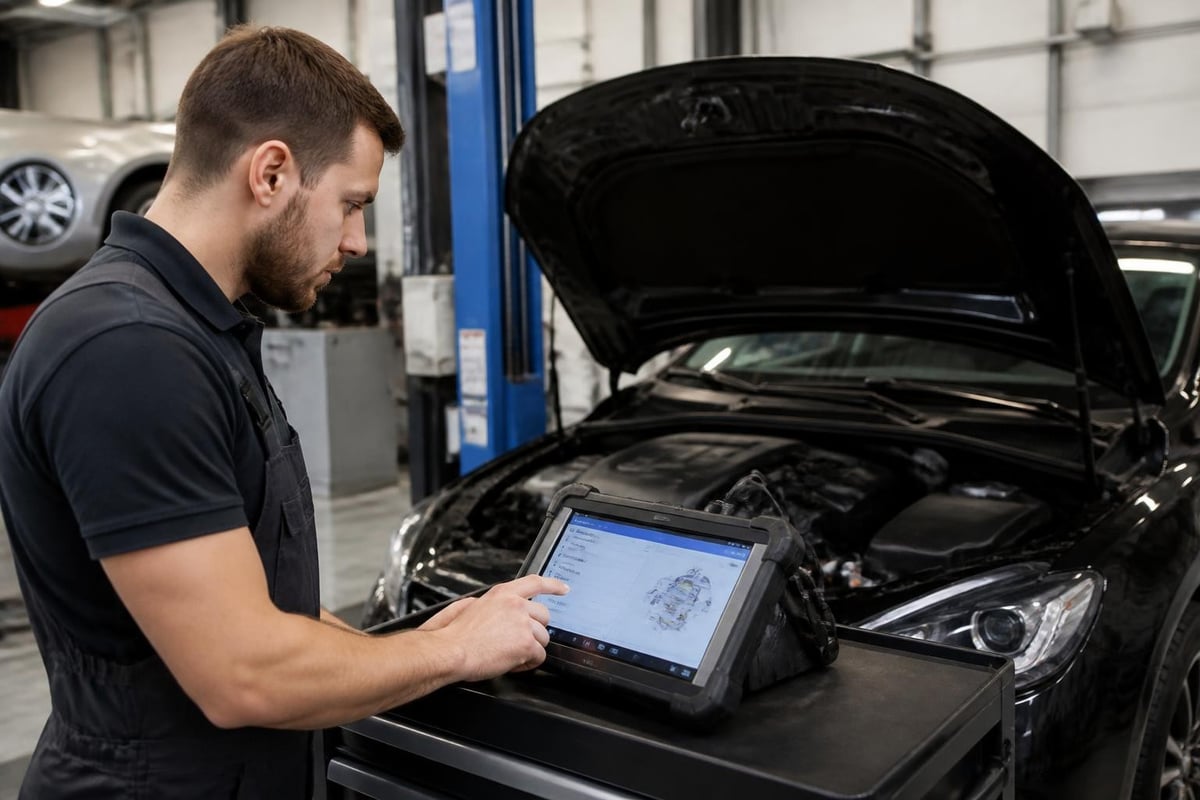
Modern BMWs, Mercedes, Audis, Volkswagens, and Skodas feature onboard diagnostic systems that monitor hundreds of parameters continuously. These systems generate fault codes that require manufacturer-specific scan tools to interpret accurately.
Generic code readers miss crucial data that European-specific diagnostic systems capture. When your dashboard warning light illuminates, the underlying cause might involve multiple interconnected systems that only proper diagnostics can unravel.
Common diagnostic scenarios include:
- Engine management light activation
- ABS and stability control warnings
- Transmission performance issues
- Climate control malfunctions
- Electronic parking brake errors
Specialized Component Requirements
European vehicles utilize components engineered to exacting specifications. Your Audi's dual-clutch transmission requires different service procedures than a conventional automatic. Mercedes air suspension systems need specific expertise that general mechanics might lack.
Proper vehicle service maintenance for these sophisticated systems requires technicians who understand manufacturer-specific procedures. The federal regulations on allowable maintenance establish baseline standards, but European manufacturers often exceed these requirements with proprietary technologies.
Building an Effective Maintenance Schedule
Creating a personalized maintenance schedule ensures your vehicle receives appropriate care based on how you actually use it. Auckland's North Shore driving conditions differ significantly from European environments where these vehicles were originally tested.
Short trips where engines don't reach optimal operating temperature create different wear patterns than motorway driving. Coastal environments introduce salt exposure that accelerates corrosion. Stop-and-go traffic stresses brake systems more than open-road driving.
Adjusting for Driving Conditions
Consider these factors when planning your vehicle service maintenance schedule:
- Urban vs motorway driving: City driving increases brake wear and creates more frequent oil contamination
- Climate exposure: Coastal proximity demands more frequent underbody inspections and corrosion prevention
- Towing or heavy loads: Increases stress on transmission, brakes, and suspension components
- Vehicle age: Older vehicles require more frequent inspections even if kilometres remain low
- Performance modifications: Any changes to stock configuration alter maintenance requirements
Research shows that preventative maintenance best practices significantly extend vehicle operational life when tailored to actual usage patterns rather than solely following generic schedules.
Documentation and Record Keeping
Maintaining detailed service records proves invaluable for several reasons. Complete documentation enhances resale value by demonstrating responsible ownership. Service history helps technicians identify patterns or recurring issues. Warranty claims often require proof of proper maintenance.
Your records should include:
- Date and odometer reading for each service
- Specific work performed
- Parts replaced with part numbers
- Technician notes and recommendations
- Invoices and receipts
Digital record-keeping systems make this information easily accessible and difficult to lose. Many modern service centres provide online portals where your complete service history remains available indefinitely.
Quality Assurance in Vehicle Service Maintenance
Not all service providers deliver equivalent quality. For European vehicles, the expertise gap between specialized independent workshops and general mechanics can significantly impact your vehicle's longevity and performance.
Selecting the Right Service Provider
When evaluating potential service providers, consider their specific experience with your vehicle's make and model. Specialized training, manufacturer-specific diagnostic equipment, and access to technical service bulletins distinguish expert providers from generalists.
Factory-trained technicians understand the engineering philosophy behind your vehicle's design. They recognize common issues specific to your model and know the most effective solutions. This expertise prevents misdiagnosis and unnecessary repairs that waste your money whilst leaving the actual problem unresolved.
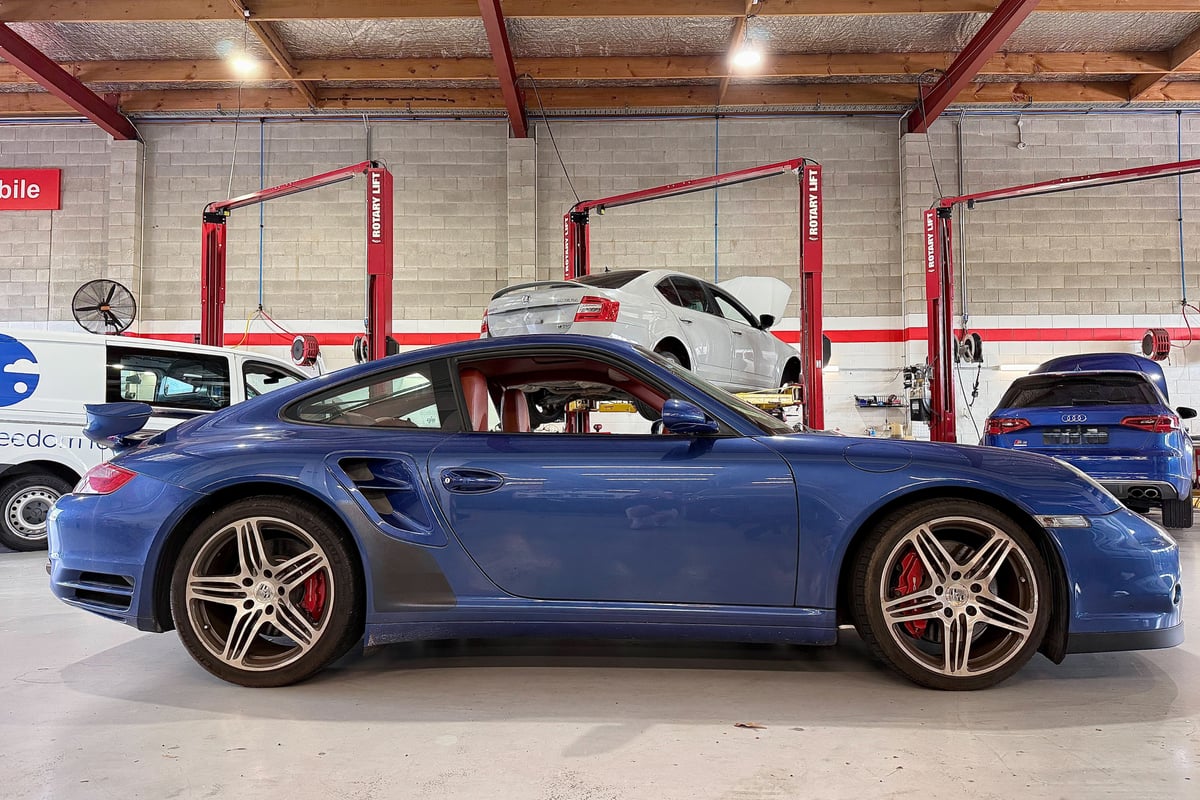
For those seeking expert care for Volkswagen, Audi, and Skoda vehicles, specialized facilities with factory-trained technicians offer the precise expertise these sophisticated vehicles demand. You can conveniently schedule your next service appointment through online booking platforms that streamline the process whilst ensuring your vehicle receives manufacturer-appropriate care.
| Quality Indicator | What to Look For |
|---|---|
| Technician Certification | Factory training, ongoing education programs |
| Equipment Investment | Manufacturer-specific diagnostic tools |
| Parts Quality | Genuine or equivalent European-standard components |
| Warranty Coverage | Comprehensive parts and labour guarantees |
| Communication | Clear explanations, detailed estimates, progress updates |
Parts Selection and Quality Standards
The temptation to save money through cheaper aftermarket parts often proves counterproductive. European vehicles engineered to precise specifications perform optimally only when components meet original equipment standards.
Inferior brake pads might cost less initially but wear faster, perform poorly, and potentially damage rotors. Cheap oil filters may lack proper filtration efficiency, allowing contaminants to circulate through your engine. Substandard suspension components compromise handling characteristics that define your vehicle's driving experience.
Quality parts paired with expert installation form the foundation of effective vehicle service maintenance. Guidelines for scheduled maintenance best practices emphasize using components that meet or exceed manufacturer specifications as essential to long-term reliability.
Advanced Maintenance Considerations
Beyond routine service intervals, several specialized maintenance procedures deserve attention as your European vehicle accumulates kilometres or ages.
Timing Belt Replacement
Interference engines, common in European vehicles, suffer catastrophic damage if timing belts fail. Pistons collide with valves, creating repair bills that dwarf preventive replacement costs.
Timing belt intervals vary by manufacturer and model:
- Volkswagen and Audi typically specify replacement at 90,000-120,000 km
- BMW increasingly uses timing chains requiring less frequent service
- Mercedes engines vary widely; consult specific model requirements
- Skoda follows similar intervals to Volkswagen group specifications
When replacing timing belts, best practice includes simultaneous replacement of water pumps, tensioners, and accessory belts. These components experience similar wear patterns, and labour costs overlap significantly with timing belt replacement.
Carbon Buildup Management
Direct-injection engines, prevalent in modern European vehicles, develop carbon deposits on intake valves over time. Unlike port-injection engines where fuel washing keeps valves clean, direct-injection systems spray fuel directly into cylinders.
Symptoms of carbon buildup include:
- Rough idle quality
- Hesitation during acceleration
- Reduced fuel economy
- Check engine light activation with misfire codes
Professional cleaning procedures restore performance without requiring valve removal. This preventive maintenance extends engine life whilst maintaining the efficiency European manufacturers engineered into these sophisticated powerplants.
Transmission Service
European transmissions, particularly dual-clutch and automatic units, require specific service procedures. Contrary to "lifetime fill" claims, transmission fluid degrades through heat cycles and friction material contamination.
Regular transmission service at 60,000-80,000 kilometre intervals prevents expensive failures. This vehicle service maintenance procedure involves more than simple fluid drainage; proper service replaces fluid in torque converters and valve bodies, ensuring complete system refreshment.
Seasonal Maintenance Considerations
New Zealand's varied climate throughout the year creates different demands on your European vehicle. Proactive seasonal preparation prevents inconvenient failures whilst optimizing performance.
Winter Preparation
Auckland's mild winters still create challenges for vehicle systems. Battery capacity diminishes in colder temperatures, and ageing batteries that function adequately in summer may fail on cold mornings.
Winter maintenance checklist:
- Battery load testing and terminal cleaning
- Windscreen wiper blade replacement
- Washer fluid concentration adjustment
- Tyre tread depth verification
- Heater and defroster system testing
Summer Readiness
Higher temperatures stress cooling systems and accelerate fluid degradation. Air conditioning systems require proper refrigerant charge and leak-free operation to handle New Zealand's summer heat.
Regular coolant system pressure testing identifies weak hoses or deteriorating radiators before they fail. Air conditioning service ensures your climate control delivers the comfort European manufacturers intended whilst preventing expensive compressor damage from low refrigerant operation.
Cost Management Without Compromising Quality
Strategic planning makes quality vehicle service maintenance affordable without shortcuts that compromise reliability.
Budget Planning Strategies
Anticipating major service intervals allows you to budget accordingly rather than facing unexpected expenses. Create a maintenance fund that receives regular contributions, ensuring money availability when scheduled services arrive.
Understanding your specific vehicle's common maintenance requirements helps predict future costs. Research typical intervals for major components like brakes, batteries, and suspension bushings specific to your model.
False Economy Recognition
Delaying necessary maintenance rarely saves money long-term. Worn brake pads that aren't replaced damage rotors, converting a pad replacement into a more expensive brake overhaul. Ignored fluid leaks lead to component damage far exceeding seal replacement costs.
Quality service providers offer transparent pricing and explain the consequences of deferring recommended maintenance. This information empowers you to make informed decisions about prioritizing repairs without pressure or confusion.
Proper vehicle service maintenance represents the most cost-effective approach to European car ownership, preventing expensive failures whilst preserving the performance and refinement that attracted you to these vehicles originally. For Volkswagen, Audi, Mercedes, BMW, and Skoda owners on Auckland's North Shore, VODIS Automobile combines over 20 years of specialized European vehicle expertise with factory-trained technicians who understand the unique requirements of your vehicle. Whether you need routine servicing or complex diagnostics, their commitment to quality workmanship and honest communication ensures your European vehicle receives the expert care it deserves.