
Owning a Volkswagen or Audi represents a commitment to German engineering excellence, but maintaining these sophisticated European vehicles requires specialized knowledge and expertise. Auckland's North Shore drivers increasingly seek volkswagen audi repair specialists who understand the intricate systems, shared platforms, and unique diagnostic requirements of these premium brands. With proper maintenance and expert care, these vehicles deliver exceptional performance and reliability for years to come.
Understanding the Volkswagen-Audi Connection
The relationship between Volkswagen and Audi runs deeper than simple corporate ownership. These brands share fundamental engineering platforms, electrical architectures, and mechanical components across multiple model ranges.
Shared Platform Engineering
The Volkswagen Group's modular platform strategy means that many VW and Audi models share identical underpinnings. The MQB (Modular Transverse Matrix) platform, for instance, serves as the foundation for vehicles ranging from the VW Golf to the Audi A3. This engineering approach creates efficiencies in manufacturing whilst maintaining distinct brand characteristics.
Key shared components include:
- Engine families (EA888 turbocharged four-cylinder, EA839 V6)
- Transmission systems (DSG dual-clutch, S tronic)
- Electronic control modules and sensor networks
- Suspension geometry and mounting points
- Brake system architectures
This parts commonality means that technicians experienced in volkswagen audi repair can leverage knowledge across both brands, understanding how systems interact and where potential issues may arise.

Common Repair Issues Across VW and Audi Models
Despite their reputation for quality, certain patterns emerge in volkswagen audi repair requirements. Understanding these common concerns helps owners maintain their vehicles proactively.
Engine and Drivetrain Concerns
The EA888 engine family, found in numerous VW and Audi models, occasionally experiences specific maintenance requirements. Carbon buildup on intake valves affects direct-injection engines, particularly those without port injection supplementation. This condition gradually reduces performance and fuel efficiency.
Timing chain tensioner wear represents another concern across multiple model years. Early detection through oil analysis and listening for unusual startup noises prevents catastrophic engine damage.
| Issue | Affected Models | Typical Mileage | Prevention |
|---|---|---|---|
| Carbon buildup | TSI/TFSI engines (2008-2016) | 60,000-100,000 km | Walnut blasting service |
| Timing chain stretch | 2.0T EA888 Gen 1 & 2 | 80,000-150,000 km | Regular oil changes, quality oil |
| Turbocharger wastegate | Various 2.0T models | 100,000-180,000 km | Proper warm-up/cool-down cycles |
| DSG mechatronic unit | All DSG/S tronic models | 100,000+ km | Transmission fluid services |
Electrical System Diagnostics
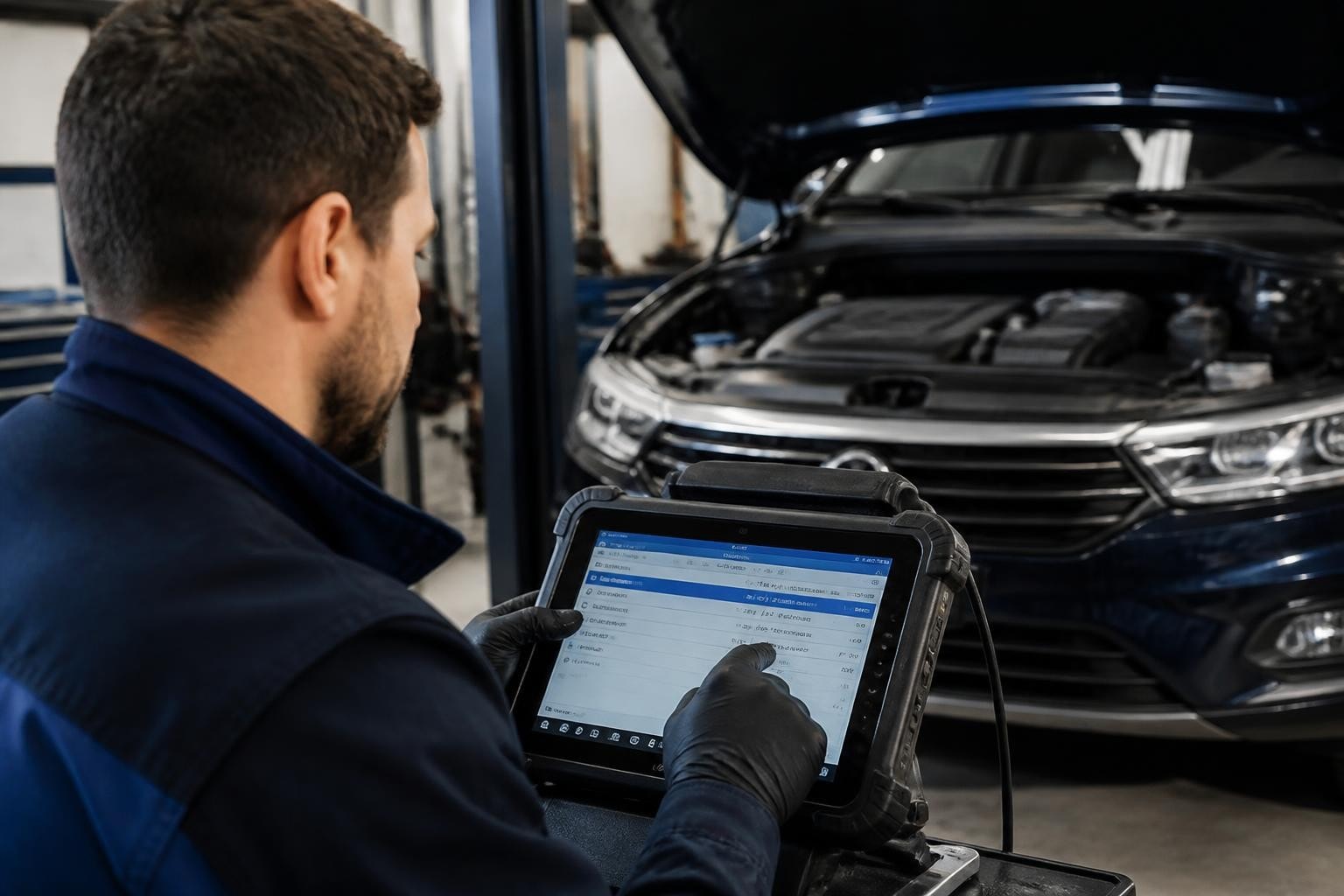
Modern Volkswagen and Audi vehicles feature sophisticated electronic systems requiring specialized diagnostic equipment. The diagnostic capabilities needed for these vehicles extend beyond generic OBD-II scanners.
Factory-level diagnostic tools access manufacturer-specific fault codes, adaptation channels, and coding functions. These advanced systems allow technicians to:
- Read fault codes from all control modules (not just powertrain)
- Perform guided troubleshooting procedures
- Complete module coding and adaptations
- Access live data streams with multiple parameters simultaneously
- Execute component testing and output activations
Many electrical issues stem from water ingress affecting modules or corroded ground connections. Auckland's coastal climate makes these concerns particularly relevant for North Shore vehicle owners.
Maintenance Schedules and Service Intervals
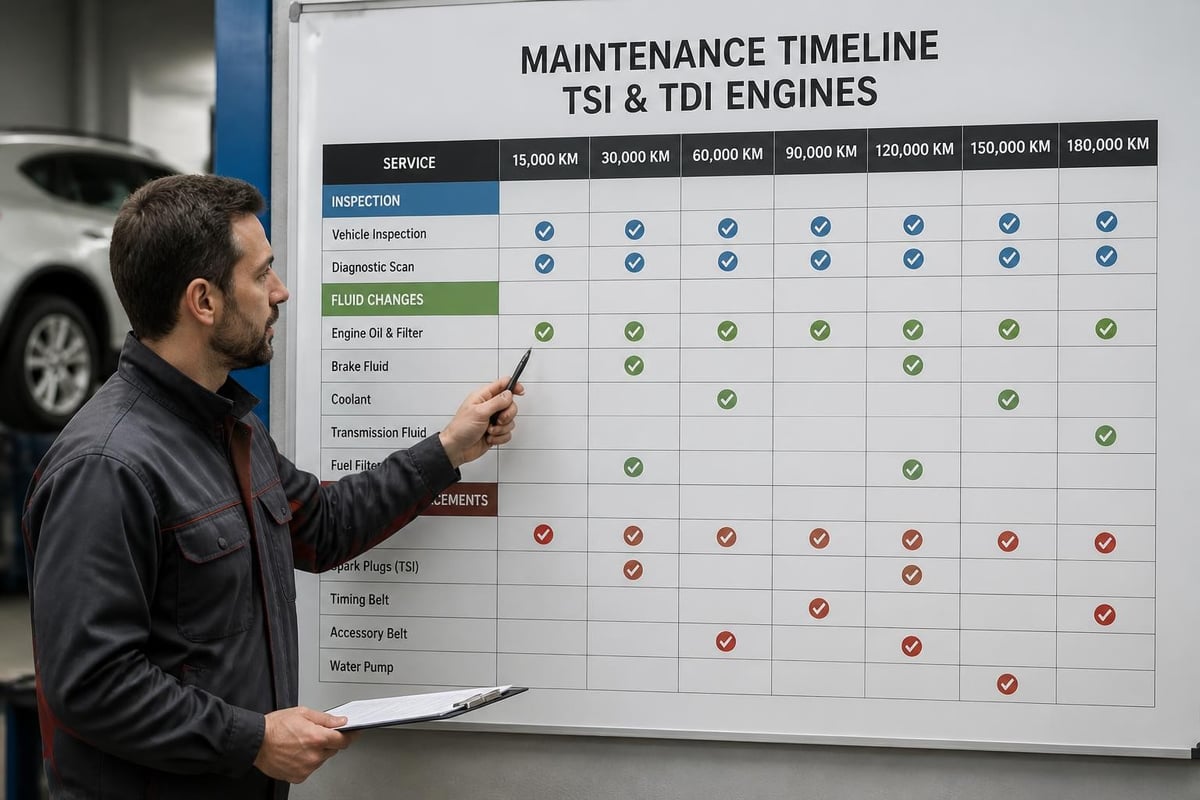
Volkswagen and Audi employ variable service intervals based on driving conditions, but understanding the recommended schedules ensures optimal vehicle longevity.
Standard Service Requirements
Modern VW and Audi models use flexible servicing schedules that adapt to driving style and conditions. However, Auckland's stop-start traffic and shorter journey patterns often classify as "severe duty" operation.
Annual inspection service includes:
- Engine oil and filter replacement
- Multi-point inspection of brakes, suspension, and steering
- Tire pressure and tread depth verification
- Battery testing and charging system check
- Fluid level verification (coolant, brake, power steering)
- Visual inspection of timing belt or chain condition (where accessible)
Major service intervals typically require:
- Air filter replacement (30,000-60,000 km)
- Cabin filter replacement (15,000-30,000 km)
- Brake fluid flush (24 months)
- Coolant replacement (90,000-150,000 km)
- Spark plug replacement (60,000-90,000 km depending on specification)
- DSG/S tronic transmission service (60,000 km)
The official service information provides detailed maintenance schedules tailored to specific model years and engine variants.
Choosing the Right Repair Specialist
Not all workshops possess the expertise, equipment, or parts access required for proper volkswagen audi repair work. Selecting the appropriate service provider significantly impacts repair quality and long-term reliability.
Essential Qualifications and Equipment
Factory-trained technicians bring invaluable knowledge to European vehicle servicing. Their training covers the latest technical developments, recall campaigns, and manufacturer-approved repair procedures.
Critical equipment requirements include:
- VAS diagnostic systems or equivalent professional-grade tools
- Proper lifting equipment rated for vehicle weights
- Specialized tools for timing belt/chain service
- Wheel alignment equipment with manufacturer specifications
- Refrigerant recovery and recharge systems
Many independent specialists invest heavily in these resources whilst offering more competitive pricing than dealership service departments. For North Shore residents seeking professional volkswagen audi repair services, booking online with experienced technicians streamlines the process whilst ensuring factory-standard workmanship.
Parts Quality Considerations
The parts selection process significantly influences repair longevity and vehicle performance. Three primary categories exist in the aftermarket:
| Parts Category | Quality Level | Warranty | Price Point | Best Use Case |
|---|---|---|---|---|
| Genuine OEM | Factory specification | 24 months typically | Premium | Critical safety systems, engine internals |
| OEM Equivalent | Meets or exceeds OEM | 12-24 months | Mid-range | General maintenance, wear items |
| Aftermarket Budget | Variable quality | Limited or none | Economy | Non-critical components (with caution) |
Reputable volkswagen audi repair specialists source genuine or OEM-equivalent components for critical systems. Engine management sensors, ABS components, and safety-related parts warrant authentic replacement parts to ensure proper system integration and diagnostic compatibility.
Advanced Diagnostic Procedures
Complex volkswagen audi repair scenarios require systematic diagnostic approaches beyond simple fault code reading. Modern vehicles employ multiple interconnected control modules that communicate across various bus systems.
System Integration Challenges
A single fault code may represent the symptom rather than the root cause. Experienced technicians follow logical diagnostic paths, considering how systems interact.
For instance, an illuminated check engine light with a lean fuel mixture code could stem from:
- Air intake leaks after the mass airflow sensor
- Faulty fuel pressure regulation
- Intake manifold runner control failures
- PCV system restrictions
- Turbocharger boost control issues
The comprehensive repair tips available for these platforms demonstrate the complexity involved in proper diagnosis and repair.
Coding and Adaptation Requirements
Many volkswagen audi repair procedures require post-installation coding or adaptation. Replacing a steering angle sensor, for example, necessitates calibration through the diagnostic system. Installing a replacement control module often requires coding to match the vehicle's specific configuration and installed options.
These programming requirements explain why DIY repairs sometimes create additional complications. Professional technicians understand which procedures require electronic follow-up and possess the tools to complete these processes correctly.
Preventative Maintenance Philosophy
The most cost-effective approach to volkswagen audi repair involves preventing major failures through attentive maintenance and early intervention.
Oil Quality and Change Intervals
VW and Audi engines demand high-quality synthetic lubricants meeting specific viscosity and performance standards. Using incorrect oil specifications accelerates wear and may cause timing chain tensioner failures.
Critical oil specifications:
- VW 502.00/505.00/505.01 for most petrol engines
- VW 504.00/507.00 for modern long-life service intervals
- AUDI specific approvals for certain performance models
- Viscosity grades: typically 0W-30, 0W-40, or 5W-30 depending on engine
Auckland's moderate climate suits lower viscosity oils, but performance vehicles may require heavier grades during track use or spirited driving.
Early Warning Sign Recognition
Attentive owners identify developing issues before they escalate into expensive repairs:
- Unusual noises during startup may indicate timing chain stretch or turbocharger bearing wear
- Hesitation or rough idling often suggests ignition coil degradation or carbon buildup
- Transmission shifting irregularities can precede mechatronic unit failures in DSG boxes
- Dashboard warning lights require immediate professional diagnosis rather than code clearing
- Coolant loss without visible leaks might indicate head gasket concerns
The Center for Auto Safety resources provide valuable information about technical service bulletins and recall campaigns affecting specific model years.
Model-Specific Considerations
Different Volkswagen and Audi models present unique volkswagen audi repair challenges based on their engineering, age, and intended purpose.
Performance Vehicle Requirements
Audi S and RS models, along with VW GTI and R variants, demand specialized knowledge beyond standard repair procedures. These vehicles employ:
- Higher-output engine variants with reinforced components
- Upgraded brake systems requiring specific bedding procedures
- All-wheel-drive systems (quattro/4MOTION) with additional maintenance points
- Sport suspension requiring precise alignment specifications
- Performance exhaust systems with additional sensors and controls
Technicians servicing these vehicles need familiarity with performance driving demands and the stress these place on components. Track use accelerates brake pad and fluid degradation whilst increasing thermal stress on cooling systems.
TDI Diesel Considerations
Diesel models require distinct maintenance approaches compared to their petrol counterparts. The diesel particulate filter (DPF) regeneration process demands understanding for proper vehicle operation.
DPF maintenance best practices:
- Regular motorway driving to facilitate passive regeneration
- Using correct low-ash diesel engine oil (VW 507.00 specification)
- Addressing fault codes promptly to prevent incomplete regeneration cycles
- Understanding forced regeneration procedures when required
Post-2015 TDI models incorporate additional emissions equipment, including AdBlue (DEF) injection systems requiring periodic fluid top-ups and sensor replacement.
Technical Resources and Information Access
Professional volkswagen audi repair work relies on accurate technical information and repair procedures. The quality of available resources has improved significantly for independent workshops.
Modern service information platforms provide comprehensive workshop data including wiring diagrams, component locations, torque specifications, and step-by-step procedures. This access levels the playing field between independent specialists and dealership service departments.
Advanced technicians also reference technical forums and specialist resources like the detailed platform information available for specific model families. These community resources supplement official documentation with real-world repair experiences and problem-solving approaches.
Cost Management Strategies
Understanding volkswagen audi repair economics helps owners budget appropriately whilst avoiding unnecessary expenses.
Genuine vs. Aftermarket Decisions
Not every component requires genuine VW or Audi parts. Oil filters, air filters, cabin filters, and brake pads from reputable aftermarket manufacturers often deliver excellent value without compromising quality.
Conversely, certain components warrant genuine parts investment:
- Engine management sensors (mass airflow, oxygen, camshaft position)
- Turbocharger assemblies and actuators
- ABS/ESP hydraulic units and wheel speed sensors
- Airbag system components
- High-pressure fuel system components
Experienced workshops guide customers through these decisions, explaining where savings make sense and where genuine parts prove cost-effective long-term.
Warranty Considerations
Quality volkswagen audi repair work includes comprehensive warranties covering both parts and labor. Reputable specialists typically offer 12-month warranties on major repairs, demonstrating confidence in their workmanship.
This warranty coverage provides peace of mind whilst protecting against defective components or installation errors. Always verify warranty terms before authorizing expensive repairs.
Regional Considerations for Auckland Owners
Auckland's coastal environment and driving conditions create specific challenges for Volkswagen and Audi owners requiring specialized volkswagen audi repair attention.
Corrosion Prevention
Salt air exposure accelerates corrosion on exhaust systems, brake components, and underbody hardware. Regular undercarriage washing, particularly during winter months, extends component life.
Brake caliper slide pins and parking brake mechanisms require periodic cleaning and lubrication to prevent seizure. Auckland's humidity combined with infrequent motorway driving can cause brake discs to develop surface rust, affecting performance.
Traffic Pattern Impact
The North Shore's predominantly short-trip driving pattern affects vehicle health in several ways:
- Engines rarely reach optimal operating temperature
- DPF regeneration cycles may not complete naturally
- Battery charging systems experience higher demand
- Moisture accumulation in exhaust systems accelerates corrosion
- Carbon buildup increases on intake valves and EGR systems
Compensating for these conditions through periodic longer drives and more frequent servicing maintains optimal vehicle condition despite challenging usage patterns.
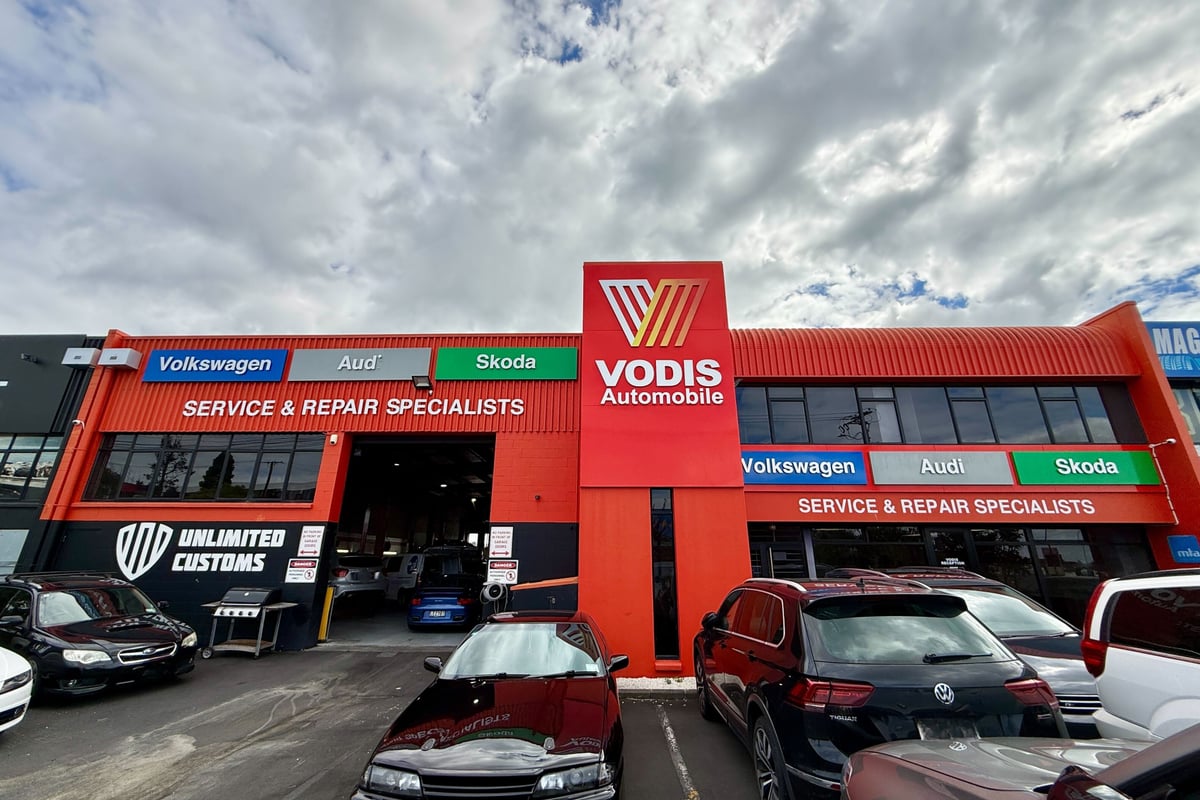
Proper volkswagen audi repair requires specialized knowledge, professional equipment, and commitment to quality workmanship that keeps these sophisticated European vehicles performing at their best. For North Shore Auckland residents seeking expert care for their Volkswagen or Audi, VODIS Automobile combines over 20 years of trusted service with factory-trained technicians who understand these vehicles intimately. Whether you need routine maintenance, complex diagnostics, or major repairs, their Albany-based facility delivers the specialist attention your European vehicle deserves.