

Maintaining your Audi requires more than routine oil changes and tire rotations. Whether you own a sleek A4, a powerful Q7, or a performance-focused RS model, understanding audi approved servicing ensures your vehicle receives the care it deserves while protecting your investment. This comprehensive approach to vehicle maintenance combines manufacturer standards, qualified technicians, and quality parts to keep your Audi performing at its peak. For Auckland owners seeking European car expertise, knowing what constitutes approved servicing helps you make informed decisions about where to entrust your vehicle.
Understanding Audi Approved Servicing Standards
Audi approved servicing follows strict protocols established by the manufacturer to maintain vehicle performance, safety, and reliability. These standards encompass everything from diagnostic equipment to technician training and parts quality.
The foundation of approved servicing rests on manufacturer specifications that dictate service intervals, required procedures, and quality benchmarks. Every Audi model has unique requirements based on engine type, drivetrain configuration, and technology features.
Core Components of Approved Service
Genuine or OEM-equivalent parts form a critical element of quality maintenance. These components meet Audi's engineering specifications and ensure compatibility with your vehicle's systems.
- Diagnostic equipment calibrated to Audi specifications
- Technical documentation aligned with current model requirements
- Service records maintained according to manufacturer standards
- Quality assurance processes verifying work completion
Technician expertise represents another essential factor. Professionals working on Audi vehicles need comprehensive knowledge of the brand's complex systems, from advanced driver assistance features to sophisticated engine management.
Independent service centers can meet these standards without dealership affiliation when they invest in proper equipment, training, and parts sourcing. The key differentiator is commitment to manufacturer protocols rather than simply holding a franchise agreement.
Service Intervals and Maintenance Schedules
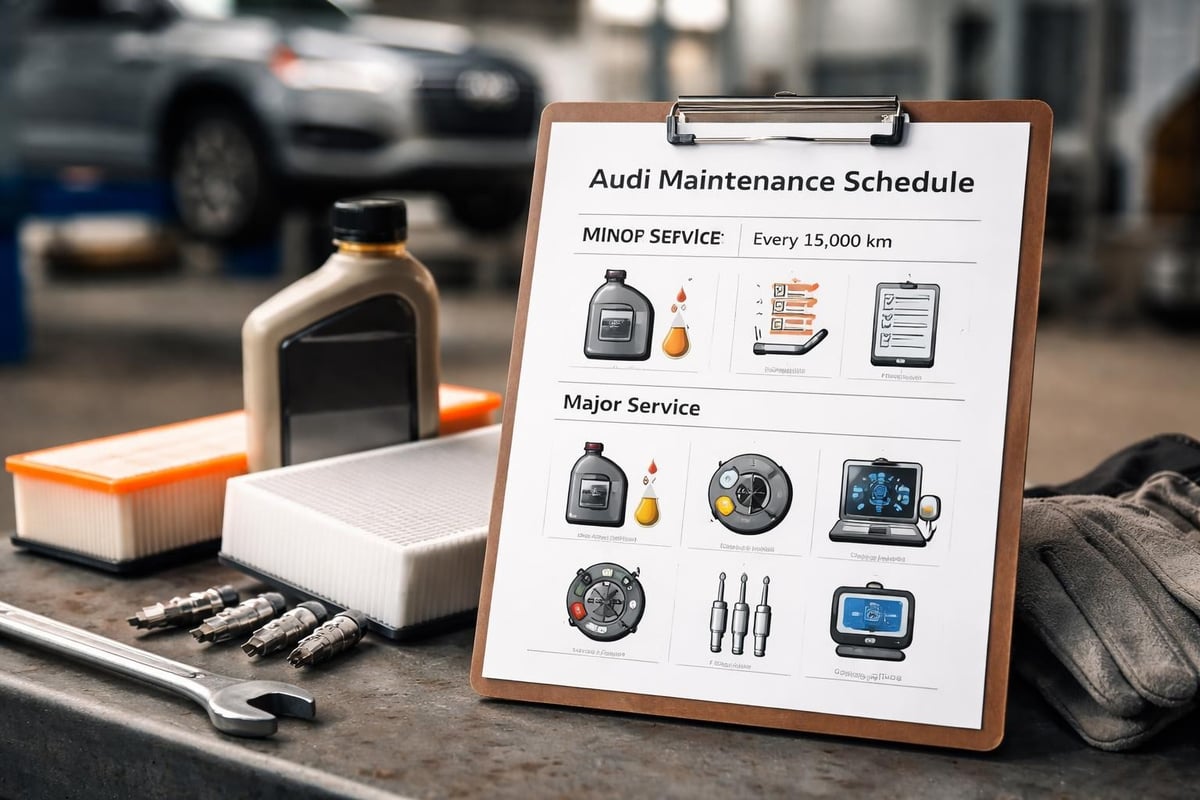
Audi vehicles operate on defined service intervals that alternate between minor and major maintenance appointments. Understanding these schedules helps you budget appropriately and maintain warranty compliance.
Minor Service Requirements
Minor services typically occur every 15,000 kilometers or 12 months, whichever comes first. These appointments focus on essential fluid changes and basic inspections.
| Service Component | Minor Service | Purpose |
|---|---|---|
| Engine oil & filter | Replaced | Lubrication and engine protection |
| Brake fluid check | Inspected | Safety system verification |
| Tire inspection | Performed | Wear assessment and rotation |
| Multi-point inspection | Completed | Identify potential issues |
Major services happen at 30,000-kilometer intervals and involve more comprehensive work. Kelley Blue Book offers detailed Audi maintenance pricing and schedules that help owners understand what to expect at each service milestone.
Advanced Service Planning
Modern Audi models feature variable service indicators that calculate maintenance needs based on driving conditions, fuel quality, and operating patterns. This intelligent system adjusts service intervals to match actual vehicle usage rather than relying solely on odometer readings.
Planning ahead for scheduled maintenance prevents inconvenient breakdowns and protects resale value. Many Auckland owners appreciate having the flexibility to book service appointments online, making it easier to coordinate maintenance with busy schedules.
Benefits of Following Approved Service Protocols
Adhering to audi approved servicing standards delivers measurable advantages that extend beyond basic vehicle operation. These benefits accumulate over the ownership period, affecting everything from daily driving experience to long-term costs.
Warranty protection tops the list of practical benefits. Maintaining proper service records with approved standards ensures warranty claims remain valid. Manufacturers require documented proof that vehicles received appropriate care using quality parts and procedures.
Performance and Reliability Advantages
Consistent adherence to service schedules maintains engine efficiency, transmission smoothness, and overall drivability. Audi engineering relies on precise tolerances and specific fluid formulations that require exact maintenance timing.
- Extended component lifespan through preventive care
- Optimized fuel efficiency from properly maintained systems
- Reduced risk of unexpected failures and costly repairs
- Preserved vehicle value for future resale or trade-in
Safety represents another crucial consideration. Brake systems, suspension components, and electronic safety features require regular inspection and maintenance to function as designed. Approved servicing protocols include comprehensive safety checks that identify potential issues before they compromise vehicle safety.
The differences between minor and standard Audi maintenance services illustrate how each service level addresses specific vehicle needs at appropriate intervals.

Cost Considerations and Value Analysis
Understanding service costs helps Audi owners budget effectively while recognizing the value delivered through proper maintenance. Prices vary based on model, service type, and provider choice.
Service Pricing Factors
Multiple variables influence final service costs. Model complexity, parts requirements, and labor rates all contribute to total expenses.
| Service Type | Typical Range (NZD) | Key Factors |
|---|---|---|
| Minor Service | $400-$650 | Oil type, filter specifications |
| Major Service | $800-$1,400 | Additional components, spark plugs |
| Brake Service | $600-$1,200 | Pad quality, rotor condition |
| Diagnostic Work | $150-$300 | Issue complexity, time required |
Independent specialists often provide approved-quality servicing at competitive rates compared to dealerships. This cost advantage stems from lower overhead expenses while maintaining technical expertise and parts quality.
Long-term value emerges through consistent maintenance that prevents major repairs. Replacing a timing belt at recommended intervals costs significantly less than repairing engine damage from a failed belt. Similarly, regular transmission fluid changes extend transmission life and avoid expensive rebuilds.
Auckland Audi owners benefit from comparing service options while ensuring chosen providers meet approved standards. The lowest price doesn't always represent the best value when quality and expertise differ significantly between providers.
What to Look for in a Service Provider
Selecting the right service provider for audi approved servicing requires evaluating several critical factors beyond simple price comparison. The best choice balances expertise, equipment, and customer service.
Technical Capabilities Assessment
Modern Audi vehicles incorporate sophisticated technology requiring specialized diagnostic tools. Service providers need equipment capable of communicating with all vehicle systems, from engine management to advanced driver assistance features.
Workshop certifications and technician qualifications provide insight into technical competency. Look for professionals with European vehicle specialization and ongoing training in Audi systems.
- Diagnostic equipment compatible with current Audi models
- Technical resources including service bulletins and wiring diagrams
- Parts sourcing ensuring genuine or approved equivalent components
- Experience depth specifically with Audi brand vehicles
Customer communication distinguishes exceptional service providers from adequate ones. Clear explanations of required work, transparent pricing, and proactive updates throughout the service process demonstrate professionalism and respect for customer time.
Reputation and Track Record
Service history matters significantly when choosing where to maintain your Audi. Established providers with decades of experience bring accumulated knowledge that benefits complex repair situations.
Reading customer reviews and seeking recommendations from other Audi owners provides valuable perspective. Pay attention to comments about work quality, pricing transparency, and how providers handle unexpected issues or warranty situations.

Independent Specialists vs Dealership Service
Audi owners face a fundamental choice between dealership service departments and independent specialists for their maintenance needs. Both options can deliver approved-quality servicing when properly equipped and staffed.
Dealership Service Advantages
Dealerships offer direct manufacturer connections, ensuring immediate access to technical support and the latest service information. Their technicians receive factory training specific to current model years and new technology rollouts.
Parts availability represents another dealership strength. Direct relationships with Audi parts distribution ensure quick access to even obscure components, potentially reducing repair turnaround time.
Independent Specialist Benefits
Independent European car specialists combine manufacturer-level expertise with personalized service and competitive pricing. These businesses often employ technicians with dealership backgrounds who bring that experience to an independent setting.
| Factor | Dealership | Independent Specialist |
|---|---|---|
| Technical expertise | Factory-trained | Often dealership-experienced |
| Equipment quality | OEM specification | Equivalent professional-grade |
| Parts sourcing | Direct manufacturer | Genuine/OEM equivalent |
| Pricing structure | Premium rates | Competitive pricing |
| Customer focus | Volume-oriented | Relationship-based |
The relationship aspect deserves particular emphasis. Independent specialists typically serve smaller customer bases, enabling them to provide more personalized attention and develop long-term relationships with vehicle owners.
For Auckland's North Shore Audi owners, proximity and convenience also factor into provider selection. Working with local specialists reduces travel time and often provides more flexible scheduling options.
Common Audi Service Requirements
Different Audi models share common maintenance requirements while also having unique service needs based on their specific engineering. Understanding these patterns helps owners anticipate upcoming service expenses.
Engine-Specific Maintenance
Turbocharged engines require particular attention to oil quality and change intervals. The heat and pressure generated by turbochargers demand premium lubricants replaced according to strict schedules.
Timing belt replacement ranks among the most critical preventive services for models equipped with belt-driven camshafts. This service typically occurs between 90,000 and 120,000 kilometers, depending on engine type. Neglecting this replacement risks catastrophic engine damage far exceeding the service cost.
Direct injection fuel systems benefit from periodic carbon cleaning services. These engines can develop carbon buildup on intake valves, affecting performance and fuel efficiency over time.
Transmission and Drivetrain Care
Audi's dual-clutch transmissions (DSG/S-tronic) require specific maintenance protocols including transmission fluid and filter changes at designated intervals. These sophisticated gearboxes deliver exceptional performance but demand proper care to ensure longevity.
- Quattro all-wheel-drive differential service
- Transfer case fluid replacement
- Driveshaft and CV joint inspection
- Clutch pack assessment for manual transmissions
Suspension systems on Audi vehicles incorporate advanced components including adaptive damping and air suspension on select models. Regular inspection identifies wear before it affects handling or safety.
Maintaining Service Records and Documentation
Comprehensive service documentation proves essential for warranty compliance, resale value, and troubleshooting future issues. Proper record-keeping demonstrates responsible ownership and vehicle care.
What Documentation Should Include
Complete service records contain more than just dates and odometer readings. Detailed documentation lists specific work performed, parts replaced, and any recommendations for future attention.
Digital service records increasingly supplement or replace traditional paper documentation. Many service providers now offer online portals where owners can access complete vehicle history, upcoming service reminders, and past invoices.
Warranty considerations make documentation particularly important during the coverage period. Manufacturers may deny warranty claims if owners cannot prove proper maintenance at appropriate intervals using approved procedures.
Keep records organized chronologically and store them securely. Whether digital or physical, having immediate access to service history helps when selling your vehicle or addressing mechanical issues that require diagnosis of past work.
Auckland Audi owners should ensure their chosen service provider maintains thorough records and provides detailed invoices. This documentation becomes part of your vehicle's permanent history and contributes to its value proposition when it's time to sell or trade.
Seasonal Considerations for Audi Maintenance
New Zealand's climate variations require specific attention to certain vehicle systems depending on the season. While Auckland enjoys relatively mild weather, seasonal maintenance still matters for optimal Audi performance.
Summer Preparation
Air conditioning systems deserve attention before summer heat arrives. Refrigerant charge, compressor operation, and cabin filter condition all affect cooling efficiency and interior comfort.
Cooling system maintenance becomes particularly important for performance models or vehicles frequently driven in stop-and-go traffic. Coolant condition, hose integrity, and radiator cleanliness prevent overheating issues.
Winter and Wet Weather Focus
Battery performance decreases in colder temperatures, making fall an ideal time for battery testing and replacement if needed. Ensuring reliable starting capability prevents inconvenient failures during winter months.
| Seasonal Service | Timing | Focus Areas |
|---|---|---|
| Spring Check | September-October | Cooling system, AC preparation |
| Summer Service | December-January | Fluid levels, tire pressure monitoring |
| Autumn Prep | March-April | Battery testing, wiper blade replacement |
| Winter Ready | June-July | Lighting systems, brake performance |
Auckland's wet winters demand attention to wiper blades, tire tread depth, and brake system performance. Quality visibility and reliable stopping power become critical safety factors during rainy conditions.
Maintaining your Audi through approved servicing standards ensures optimal performance, reliability, and long-term value regardless of where you choose to have work completed. The key lies in selecting providers who combine technical expertise, quality parts, and commitment to manufacturer specifications. For North Shore Audi owners seeking European car specialists who deliver dealership-quality service with personalized attention and competitive pricing, VODIS Automobile offers over 20 years of trusted experience maintaining Audi vehicles to the highest standards.