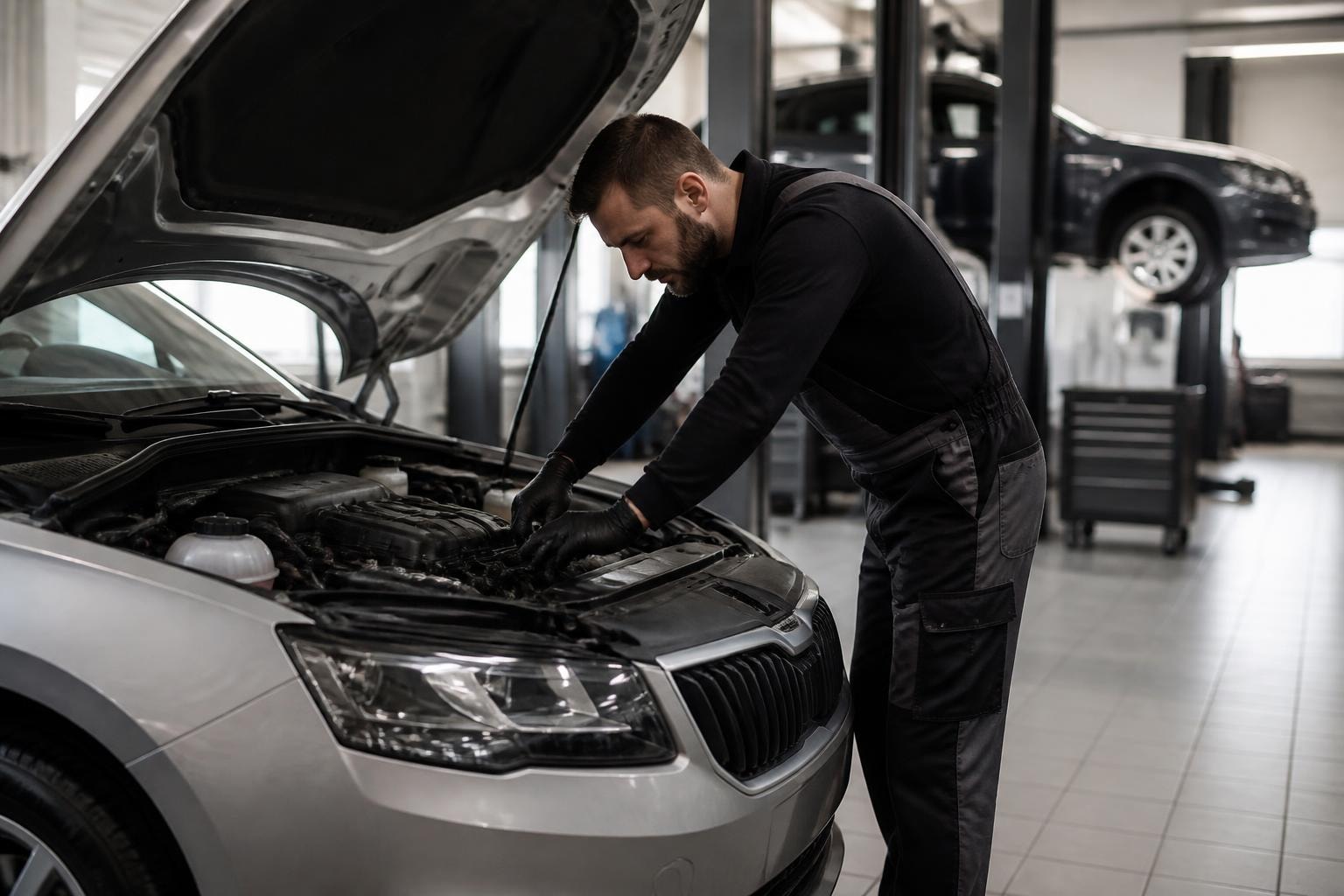

When your European vehicle requires professional attention, searching for "european auto service near me" represents more than just finding the closest mechanic. European automobiles from manufacturers like Volkswagen, Audi, Mercedes-Benz, BMW, and Skoda demand specialized knowledge, diagnostic equipment, and genuine or OEM-quality parts that general repair shops often lack. Understanding what distinguishes a quality European auto service center from ordinary garages helps you make informed decisions that protect your investment and ensure optimal performance for years to come.
Why European Vehicles Require Specialized Service
European automotive engineering follows different philosophies and standards compared to domestic or Asian manufacturers. These vehicles incorporate advanced technologies, precision-engineered components, and manufacturer-specific systems that require specialized training and equipment.
Key differences include:
- Complex electronic control units and integrated systems
- Proprietary diagnostic software requirements
- Tighter manufacturing tolerances and specifications
- Advanced turbocharger and direct injection technologies
- Sophisticated suspension and chassis systems
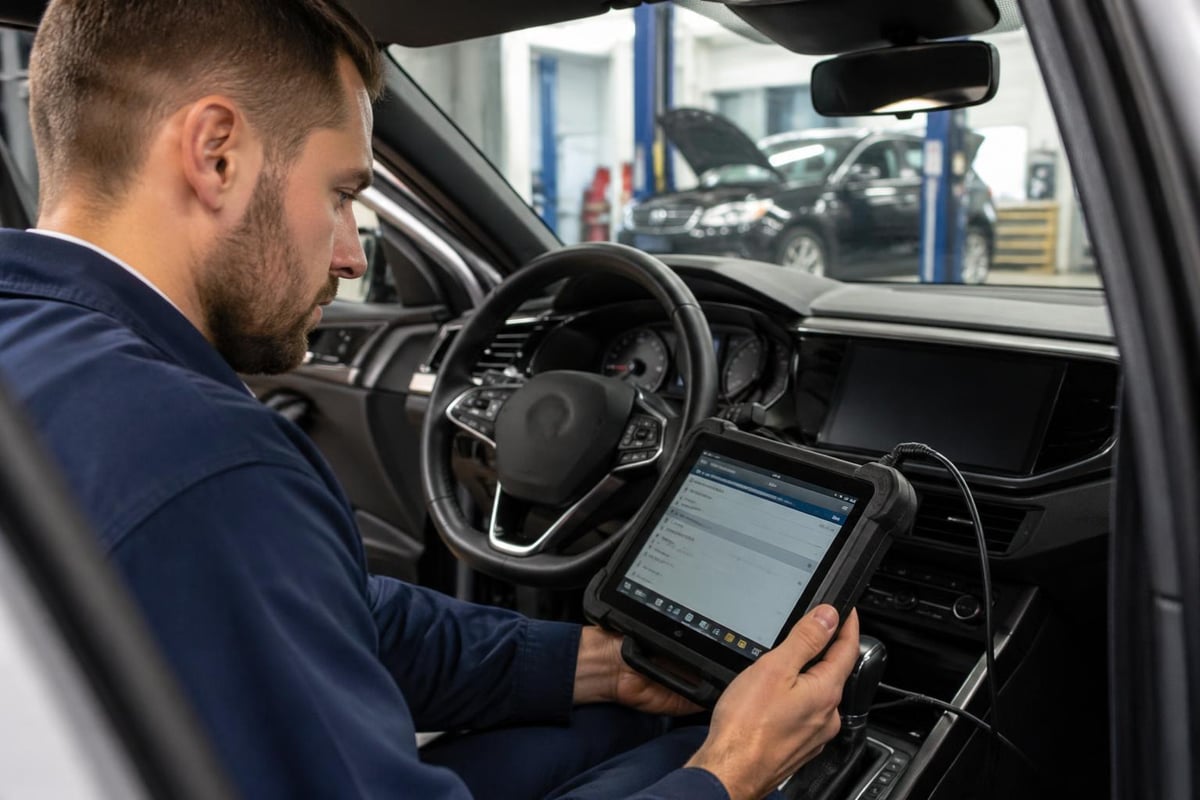
The electrical architecture in modern European vehicles often features multiple networked control modules that communicate through proprietary protocols. Standard OBD-II scanners cannot access these deeper system levels, making manufacturer-specific diagnostic tools essential for accurate troubleshooting.
Brand-Specific Engineering Considerations
Each European manufacturer implements unique engineering solutions that require specialized knowledge. Mercedes-Benz vehicles feature the COMMAND and MBUX systems with specific diagnostic requirements, while BMW employs its iDrive technology and N-series engine architecture. Volkswagen and Audi share the MQB platform but incorporate different electronic configurations across model ranges.
Understanding these common mechanical issues in European cars becomes crucial when selecting a service provider. Technicians must recognize brand-specific failure patterns and know the correct repair procedures that prevent recurring problems.
What Defines Quality European Auto Service
When researching european auto service near me, several critical factors separate exceptional facilities from average shops. Quality service centers invest heavily in ongoing technician training, diagnostic equipment, and maintaining relationships with parts suppliers who provide genuine or equivalent-quality components.
| Quality Indicator | What to Look For | Why It Matters |
|---|---|---|
| Technician Certification | Factory training, ASE certification, ongoing education | Ensures current knowledge of systems and repair procedures |
| Diagnostic Equipment | Brand-specific scanners, oscilloscopes, programming tools | Enables accurate diagnosis and system calibration |
| Parts Quality | Genuine OEM or equivalent specifications | Maintains vehicle integrity and warranty compliance |
| Service History | Years in business, customer reviews, repeat clientele | Demonstrates reliability and customer satisfaction |
| Facility Standards | Clean, organized workspace, modern equipment | Reflects professionalism and attention to detail |
The investment in specialized equipment represents a significant commitment. Diagnostic platforms for European vehicles can cost tens of thousands of dollars, with annual software subscription fees adding to operational expenses. This investment demonstrates a shop's dedication to providing accurate, efficient service.
Communication and Transparency Standards
Professional european auto service near me options prioritize clear communication throughout the service process. This includes detailed explanations of recommended repairs, transparent pricing structures, and regular updates during extended service appointments.
Quality shops provide:
- Written estimates before performing work
- Photographic or video documentation of issues
- Explanation of repair priorities and safety concerns
- Clear warranty information on parts and labor
- Maintenance schedule recommendations based on driving conditions
Common European Vehicle Service Requirements
European automobiles typically follow more stringent maintenance schedules than their domestic counterparts. Maintenance schedule guidelines for European auto repair emphasize adhering to manufacturer specifications rather than generic interval recommendations.
Regular Maintenance Services
Oil changes in European vehicles often require specific synthetic formulations meeting manufacturer approvals like VW 504.00, BMW LL-01, or Mercedes-Benz 229.5. Using incorrect oil specifications can lead to premature engine wear or turbocharger failure despite meeting basic viscosity requirements.
Essential regular services include:
- Oil and filter changes using approved specifications
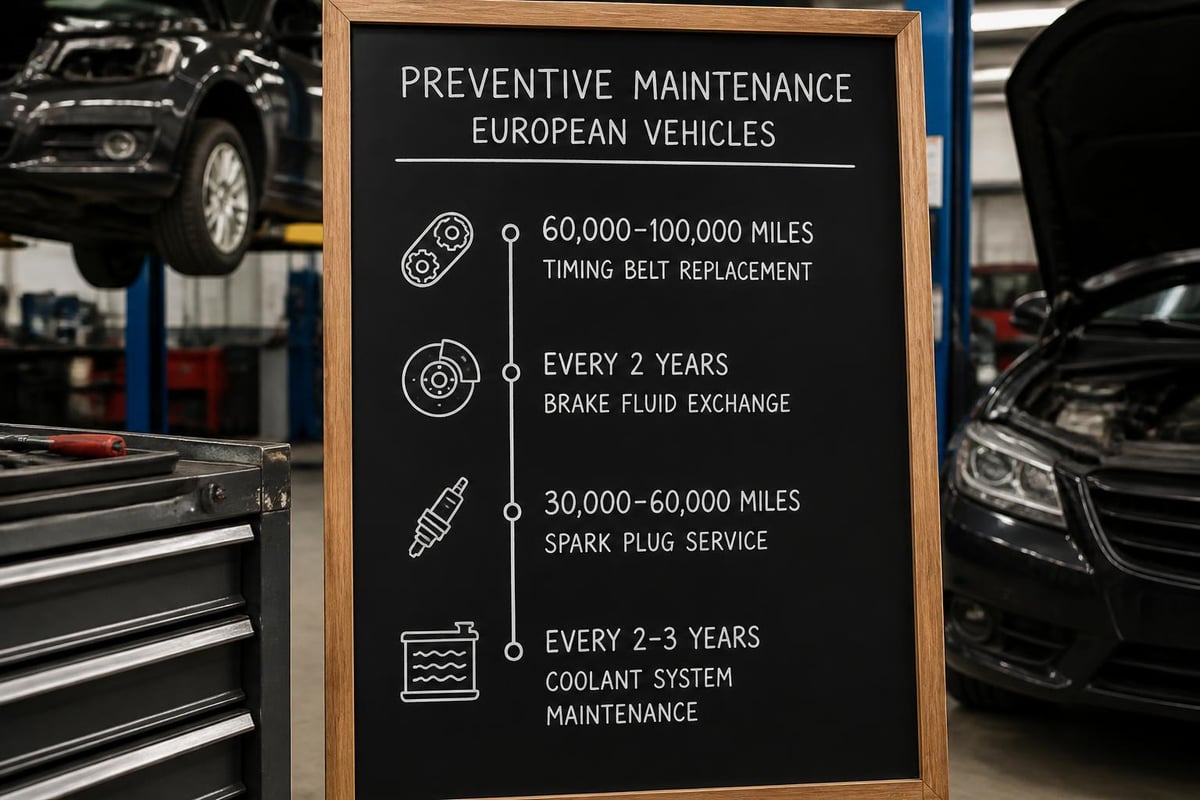
- Brake fluid exchanges every two years
- Coolant system services
- Transmission fluid and filter replacement
- Air and cabin filter replacement
- Spark plug renewal at specified intervals
Brake system maintenance requires particular attention in European vehicles. Many models use low-dust brake pad formulations that perform differently than standard pads, and some feature electronic parking brakes requiring special procedures for pad replacement.
Timing Belt and Chain Services
Timing system maintenance represents one of the most critical services for European vehicles. Interference engines, common in Volkswagen, Audi, and some BMW models, will sustain catastrophic damage if the timing belt fails during operation.
Timing belt intervals typically range from 60,000 to 120,000 miles depending on the manufacturer and engine type. However, some engines use timing chains designed for the vehicle's lifetime, though these may still require inspection or replacement under certain conditions.
Identifying Reliable European Auto Service Providers
Finding trustworthy european auto service near me requires evaluating multiple factors beyond proximity and price. The most reliable indicator of quality service comes from established reputations built over years of consistent performance.
Verification Steps
- Check credentials and certifications – Look for technicians with manufacturer-specific training or ASE Master certification
- Review customer feedback – Examine patterns in reviews rather than focusing on isolated complaints
- Visit the facility – Assess cleanliness, organization, and equipment quality
- Ask about parts sourcing – Understand their parts procurement process and quality standards
- Inquire about warranty coverage – Verify what guarantees they provide on labor and parts
Experience with your specific vehicle brand matters significantly. A shop specializing in German vehicles will have deeper expertise than one that services all European makes as a side business alongside domestic vehicles.
Questions to Ask Potential Service Providers
When evaluating options, ask detailed questions that reveal their capabilities:
- What diagnostic equipment do you use for my vehicle brand?
- How many vehicles of my make do you service annually?
- What are your technicians' qualifications and training backgrounds?
- Do you provide written estimates before beginning work?
- What warranty do you offer on repairs and parts?
- Can you provide references from customers with similar vehicles?
Common Repair Issues and Prevention Strategies
European vehicles share certain repair patterns that owners should understand. While these cars deliver exceptional performance and refinement, they also incorporate complex systems that require proactive maintenance. Learning about common European car repairs and how to avoid them helps owners make informed decisions about preventive care.
Electrical System Challenges
Modern European vehicles contain extensive electrical systems controlling everything from engine management to comfort features. Common electrical issues include:
- Battery management system failures requiring registration of new batteries
- Control module software glitches needing updates
- Sensor failures affecting multiple systems
- Wiring harness deterioration in older vehicles
Addressing electrical problems requires methodical diagnostic approaches using manufacturer-specific tools. Generic code readers often identify symptoms rather than root causes, leading to unnecessary part replacements.
Cooling System Maintenance
European engines often run at higher operating temperatures than domestic engines, placing additional stress on cooling system components. Plastic components in radiators, thermostat housings, and expansion tanks become brittle over time, particularly in vehicles exposed to temperature extremes.
Following an essential maintenance checklist for European vehicles includes regular cooling system inspections and proactive replacement of age-sensitive components before failure occurs.
Suspension and Steering Systems
European vehicles typically feature sophisticated suspension designs incorporating adaptive damping, air springs, or multi-link configurations that deliver superior handling characteristics. However, these systems require more frequent attention than simpler designs.
Common suspension issues include:
- Worn control arm bushings causing alignment instability
- Air suspension compressor failures
- Strut mount bearing deterioration
- Electronic damping system malfunctions
Cost Considerations for European Auto Service
Understanding the cost structure of european auto service near me helps set realistic expectations. European vehicle maintenance typically costs more than domestic or Asian vehicles due to several factors:
| Cost Factor | Impact | Mitigation Strategy |
|---|---|---|
| Parts Pricing | 20-50% higher than domestic equivalents | Use OEM-equivalent parts when appropriate |
| Labor Rates | Specialized knowledge commands premium pricing | Choose established independents over dealerships |
| Diagnostic Time | Complex systems require longer diagnosis | Select shops with proper equipment reducing trial-and-error |
| Special Tools | Some repairs require proprietary tools | Work with shops that maintain comprehensive tool inventory |
Independent specialists often provide 30-40% savings compared to dealership service departments while maintaining equivalent expertise and quality standards. These savings accumulate significantly over the vehicle's ownership period.
Long-Term Value Protection
Investing in quality maintenance preserves vehicle value and prevents expensive failures. A well-maintained European vehicle with documented service history commands premium pricing in the used market, often recovering a substantial portion of maintenance costs through higher resale values.
Deferred maintenance creates cascading failures where one neglected system damages others. For example, ignoring a minor coolant leak can lead to overheating that warps cylinder heads, transforming a $200 repair into a $4,000 engine rebuild.
The Importance of Service Documentation
Maintaining comprehensive service records proves essential for European vehicle ownership. Documentation serves multiple purposes beyond simple record-keeping.
Service records provide:
- Proof of maintenance for warranty claims
- Verification of care for future buyers
- Reference for troubleshooting recurring issues
- Schedule tracking for upcoming services
- Cost analysis for ownership budgeting
Quality european auto service near me options provide detailed invoices documenting parts used, labor performed, and recommendations for future service. Digital service history systems allow customers to access records remotely and share them with potential buyers.
Scheduling and Booking Convenience
Modern service centers recognize that customer convenience drives satisfaction. Online booking systems like those offered by VODIS streamline appointment scheduling, allowing customers to select service times that fit their schedules without phone tag during business hours.
Advanced booking systems provide:
- Real-time availability viewing
- Service package selection and customization
- Estimated pricing transparency
- Appointment reminders and updates
- Service history access and tracking
Regional Considerations for Auckland-Based Owners
Geographic location influences service requirements for European vehicles. Auckland's maritime climate creates specific challenges that affect maintenance priorities.
Climate-Related Maintenance Factors
The North Shore's coastal environment accelerates corrosion on brake components, exhaust systems, and underbody elements. Salt air exposure requires more frequent undercarriage inspections and protective treatments compared to inland regions.
Humidity levels also affect electrical systems, with moisture intrusion into connectors and control modules causing intermittent faults that prove challenging to diagnose. Quality service providers understand these regional patterns and adjust inspection protocols accordingly.
Local Expertise Advantages
Choosing established local european auto service near me options provides advantages beyond mere convenience. Local specialists develop familiarity with common issues affecting vehicles in their service area, from understanding how local road conditions impact suspension wear to recognizing seasonal patterns in specific component failures.
Long-term relationships with local service providers create continuity of care. Technicians who service your vehicle regularly develop familiarity with its history, making them more effective at identifying developing issues before they become major problems.
Maximizing Service Value and Vehicle Longevity
Strategic approaches to european auto service near me selection and maintenance planning maximize both value and vehicle lifespan. Understanding how to work effectively with service providers creates partnerships that benefit both parties.
Proactive Maintenance Philosophy
Reactive repair approaches where owners address only obvious failures prove more expensive than proactive maintenance strategies. Identifying and addressing wear items before failure prevents secondary damage and reduces total ownership costs.
Consider common problems solved by European car mechanics and how early detection prevents expensive cascading failures. A worn serpentine belt tensioner that fails catastrophically might cause timing chain damage, while proactive replacement during inspection costs a fraction of engine repairs.
Proactive maintenance includes:
- Regular comprehensive inspections beyond basic service
- Addressing minor fluid seeps before they become major leaks
- Replacing wear items at recommended intervals rather than waiting for failure
- Software updates to address manufacturer-identified issues
- Seasonal preparation services for extreme weather conditions
Building Service Provider Relationships
Developing ongoing relationships with european auto service near me providers creates mutual benefits. Service centers prioritize loyal customers with better scheduling flexibility and often provide courtesy services or competitive pricing for regular clients.
Communication should flow both directions. Inform your service provider about any changes in vehicle behavior, unusual sounds, or performance characteristics. These observations often provide diagnostic clues that save time and reduce costs during troubleshooting.
Technology Integration in Modern European Service
Contemporary european auto service near me facilities incorporate advanced technologies that improve diagnostic accuracy and repair efficiency. Understanding these capabilities helps you evaluate service provider sophistication.
Diagnostic Technology Evolution
Modern European vehicles contain dozens of electronic control units managing everything from powertrain operation to convenience features. Accessing these systems requires manufacturer-specific software that communicates through proprietary protocols.
Advanced diagnostic capabilities include:
- Live data streaming from multiple control modules simultaneously
- Bi-directional control testing of actuators and components
- Guided diagnostic routines for complex problems
- Software programming and coding for component replacement
- Adaptation procedures for learned parameters
Some repairs absolutely require these capabilities. Replacing a battery in many European vehicles necessitates registering the new battery with the vehicle's power management system, or the alternator will continue using the charging profile for the old battery, potentially shortening the new battery's lifespan.
Remote Diagnostics and Monitoring
Some progressive service centers offer remote diagnostic capabilities where they can monitor vehicle performance data or conduct preliminary diagnostics before the vehicle arrives at the facility. This technology reduces diagnostic time and provides customers with more accurate service estimates.
Selecting quality european auto service near me involves evaluating expertise, equipment, communication standards, and long-term value rather than simply choosing the closest or cheapest option. Professional service protects your investment while ensuring the safety, performance, and reliability that make European vehicles exceptional. VODIS Automobile has served Auckland's North Shore for over 20 years with specialized expertise in Volkswagen, Audi, Mercedes, BMW, and Skoda vehicles, combining manufacturer-level knowledge with independent service value and personalized customer care that builds lasting relationships with European vehicle owners throughout the region.